Go to Navigation Menu

The Dialogue Institute leads and sustains a movement of interreligious and intercultural dialogue within an academic setting, on a global scale. It draws its energy from intellectual inquiry, critical thinking and open exchange, enjoying its unique position on the urban campus of a secular public university. The Dialogue Institute works collaboratively with other universities, non-governmental organizations, and the business and public sectors and aims at creating an atmosphere of trust and fostering knowledge and mutual understanding in a global context.

Based at Temple University in Philadelphia, our work focuses in six primary areas:

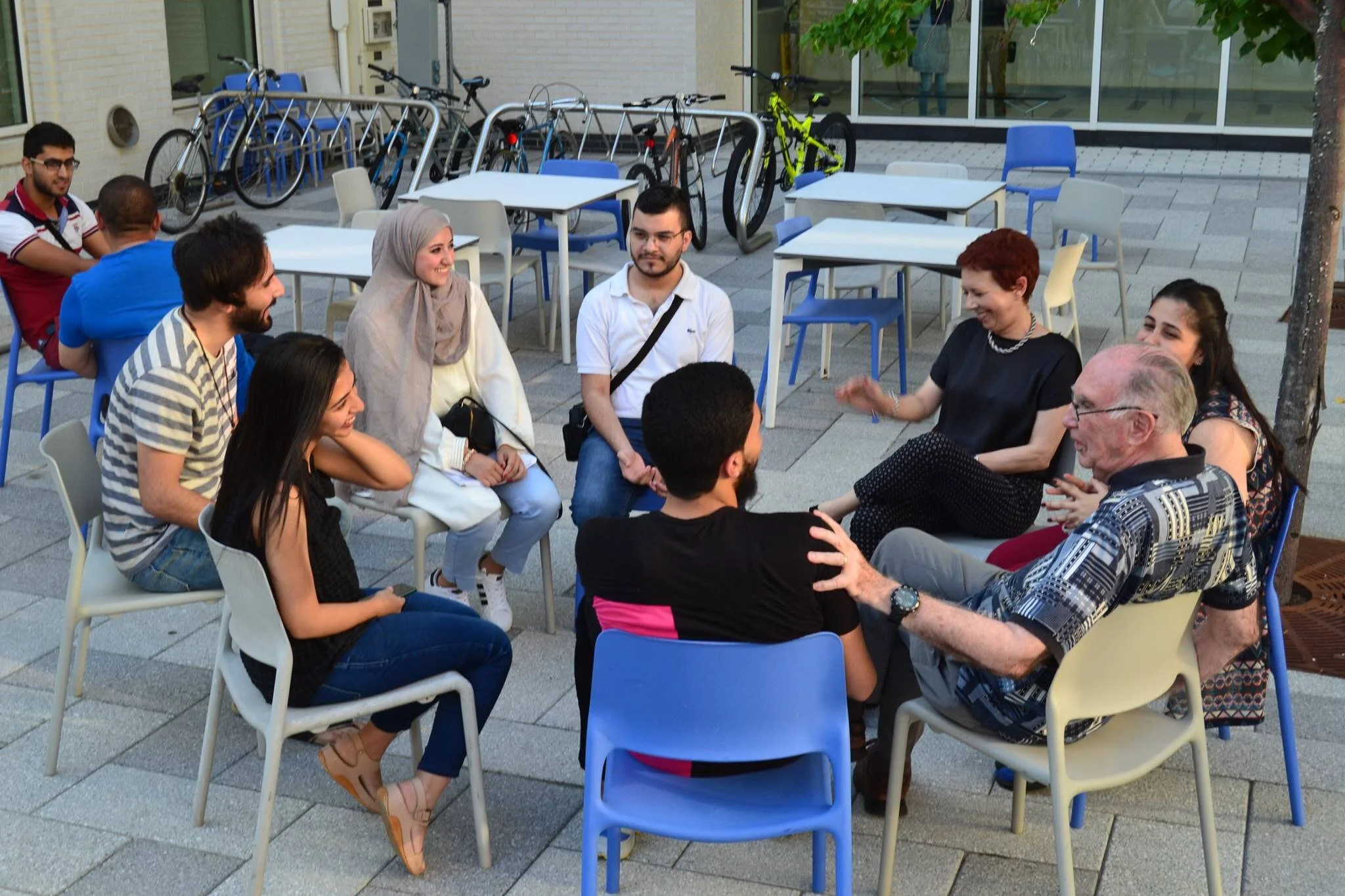
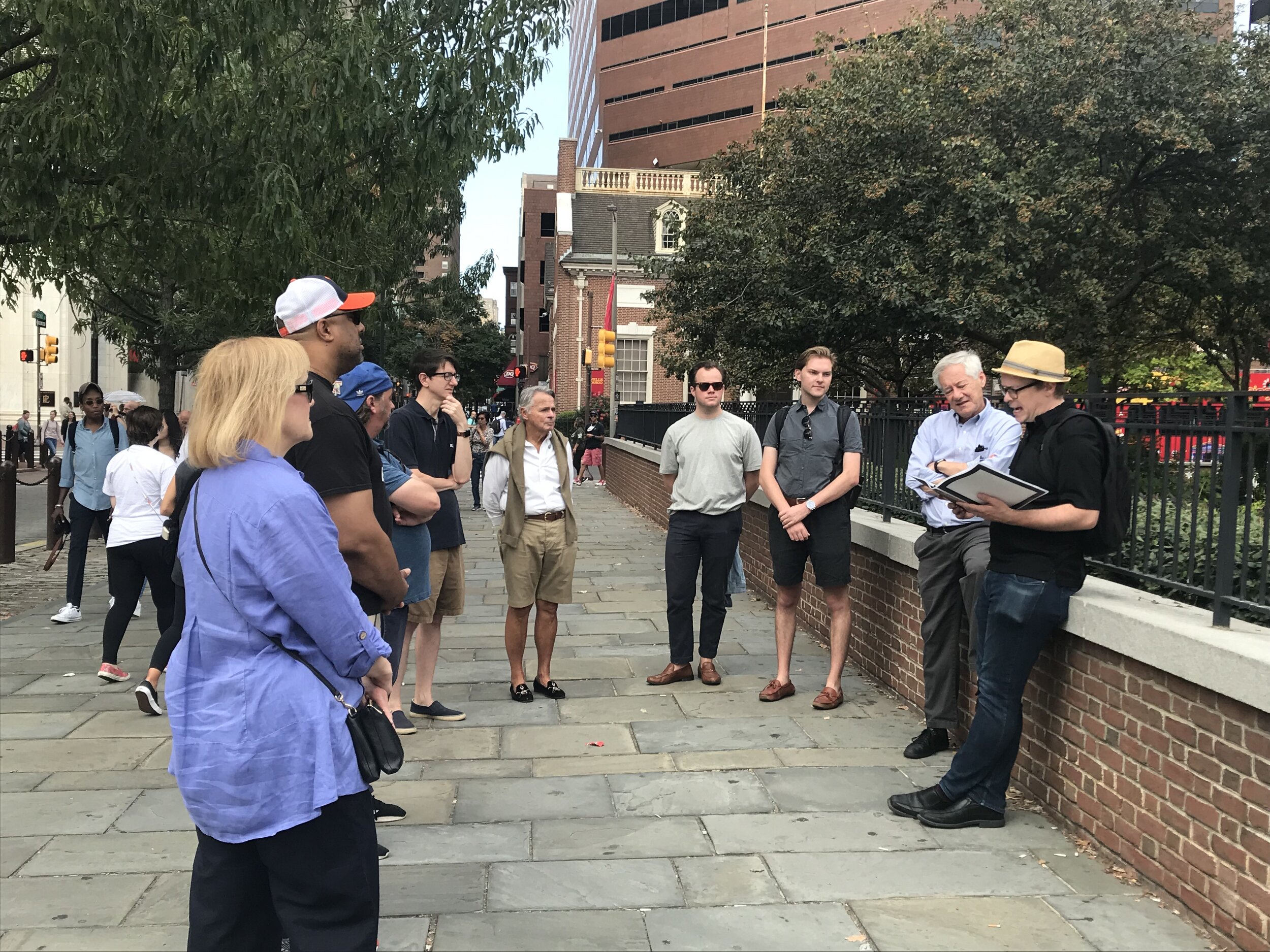
  • Interreligious dialogue training. The Dialogue Institute trains groups of scholars and professionals in the philosophy and methodologies of interreligious dialogue. Seminars of varying lengths afford participants hands-on learning and practice in dialogue, as well as the opportunity to experience the rich heritage of interreligious engagement present in the history and social fiber of Philadelphia.
  • International networking and program development. Through the Dialogue Institutes Network,(DIN) the Dialogue Institute provides support, mentoring and access to Centers/Institutes committed to promoting interreligious dialogue in their  diverse contexts, from Bangladesh to Romania to Myanmar and Indonesia. The Dialogue Institute is establishing an interreligious resource database to help connect and encourage struggling new academic centers worldwide.
  • Muslim-Jewish-Christian trialogue seminars, projects and conferences. Since 1978, the Dialogue Institute has sponsored the International Scholars’ Abrahamic Trialogue (ISAT). These conferences bring together leading scholars from each of the Abrahamic faiths in in-depth round tables in regions where interreligious understanding is crucial to promote stability and peace. These retreat and conference opportunities allow academics and leaders to pursue serious research and application for communities in crisis. The ISAT generates a process to acknowledge and reward excellence in this field and seeks role models and recognizable achievement in methodology and performance. The next Trialogue will be held in Amman, Jordan in May 2008 and will focus on interreligious cooperation in relation to socially responsible global business.
  • Resource Development and Distribution. The Interreligious Literacy Project provides quality religious and interreligious resources to the libraries of seminaries, universities, faith communities, and interreligious institutes in the developing world. Linking sponsoring communities to committed participants, the Interreligious Literacy Project also promotes dialogue through establishing community-to-community relationships across national, cultural, and religious boundaries. This effort includes the development of trustworthy materials (audio-visuals, exhibits, educational projects) in interreligious dialogue, and also identifies, evaluates and promotes materials from other sources.
  • Advancement of Interreligious Scholarship. In partnership with the Religion Department of Temple University, the Dialogue Institute offers graduate courses and opportunity for independent study in the area of Interreligious Dialogue. Graduate student Interns and Associates from many contexts contribute original research and produce new resources to further interreligious understanding and action. This includes outreach and interface with other academic disciplines in Business, Science, Medicine, Art, and Communications in the field of global ethics. This mentorship of graduate students is designed to create a cadre of new scholars in Interreligious Dialogue for this century.
  • Promote awareness and action on behalf of religious freedom. Conscience Matters is a global initiative that will help clarify and describe international events where religions or religious individuals are threatened or in peril, and assist in their plight through various avenues, particularly in the realm of dialogue, mediation and conflict resolution. The mobilization of action takes many forms, including the translation of texts and the creation and circulation of joint documents and laws regarding human dignity.
About
News
Staff
Contact
Religion and Business

The Journal of Ecumenical Studies and its related Dialogue Institute comprise an independent 501(c)(3) (NGO) at Temple University in Philadelphia, PA.